Understanding Escorted Tour Itineraries

Posted on Monday, October 31, 2011

Thinking about taking an escorted tour?  Here is a glossary of some common terms used in our itineraries:

Visit - Your coach will stop and you'll get to visit a specific site.
View - A brief stop and an opportunity to take photos.
See - Your Insight coach will drive by the site so that you can see it.
Sightseeing tour - A local city guide will accompany you on a tour of a city or site.
Orientation tour - Places of interest are pointed out, allowing you to go and explore them on your own.
'Why not see' or 'perhaps enjoy' - These phrases refer to optional excursions not included in the tour package, but are available for an additional fee.
Time to explore and discover - Free time on your own.
A day to relax - No planned activities; time for optional excursions or other independent activities.

Our tour specialists are always available to help you understand what is included on a tour vacation, so that you can plan how much money to budget on your European vacation.

Singapore's Cuisine

Posted on Sunday, August 28, 2011

Experience the true diversity of Singagpore, where adventurous chefs have adopted spices and techniques from other cultures that have created a new type of eating entirely.  Head to Lau Pa Sat, an open-air market built in the gorgeous Victorian style of cast-iron.  Here you will see Chinese chefs experiment with turmeric, tamarind and ghee, while Malay chefs serve mouthwatering Islamic halal complimented with Chinese noodles. 

Stroll down the narrow old port streets of River Mouth, Clark Quay and Boar Quay where resorted industrial warehouses house the latest gastropubs and restaurants, complete with numerous varieties of dishes and delicacies.

Uniworld China River Cruises Free Upgrade

Posted on Friday, August 26, 2011

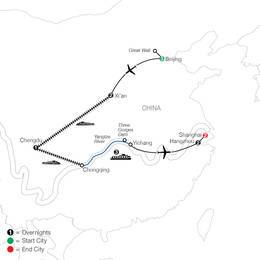
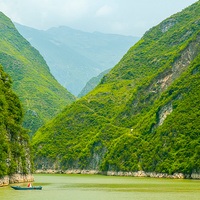
It's a country of phenomenal geographic diversity and is reputed to be the single oldest uninterrupted civilization in the world. China's rich history boasts of many legends and dynasties. It's a country of abundant natural splendor. From the majestic Himalayan Mountains to the mighty Yangtze River, the land is broad and diverse. It's a country of old and new cities, earthly and ethereal landscapes, and impressive historical sights. Picture a beautiful pagoda with golden dragons or a luminous statue of the Buddha alongside new office buildings and shopping malls. The vastness and profoundness of this great land can't be fully explained with words. It needs to be experienced first hand.

Pay in full at time of booking and receive a FREE upgrade to an Executive Suite while sailing onboard a Victoria Cruises ship along China's legendary Yangtze River in 2011!

Best Time to Travel to India

Posted on Sunday, July 31, 2011

India is the seventh largest country in the world and as such the climate in one part of the country can differ significantly from another. Broadly speaking, the best time to visit India is during its winter season, from October to March, when the weather is very pleasant in most parts of the country. The months of September and April, with warm days and cool evenings, are also a comfortable time to travel.

A major attraction for visitors is India’s colorful fairs and festivals, most of which take place during this period. Popular Hindu festivals such as Dussehra and Diwali take place in October or November, while the Pushkar fair in Rajasthan in November also attracts a lot of visitors from around the globe. The festival of colors, Holi, takes place in March and is best celebrated in Jaipur or Jodhpur.

Summer is at its peak in India from May to June when most of India experiences very high temperatures. This is the time to escape into one of the many picturesque hill stations. In some of these cool retreats, adventure sports such as trekking, paragliding and angling are available. As summer is considered the lean season for tourism, most services are available at attractive prices.

Monsoons arrive in late June and cool down the Indian sub-continent. The monsoon period usually runs through to August. However, the south-eastern region receives most of its rainfall between mid-October and late December while other areas of India such as Ladakh, the highest desert in the world, and the neighboring Himachal Pradesh remain dry, which opens up trekking opportunities for visitors.

Content provided by Abercrombie & Kent

Japans Bullet Train

Posted on Sunday, June 19, 2011

Japan Railways opened up a new line in Kyushu, Japan on the Shinkansen bullet train line. It is an extension of the Tohoku Line. This new line enables travel from Shin-Osaka to Kagoshima to be made in only 3 hours and 45 minutes, having cut down the time by about 77 minutes, making it the fastest train in Japan. This service is called “Mizuho”. The trip from Hakata to Kagoshima now takes 1 hour and 19 minutes instead of about 2 hours and 12 minutes.  The new complete line is 159 miles between Hakata and Kagoshima, and it puts the historic landmarks and nature of Kyushu in easier reach.


The bullet train experience is actually quite relaxing. Most of the bullet train stations have shopping malls, souvenir booths, and food courts. Prior to boarding a Japanese bullet train, you will choose a bottled tea and a bento box, which is a Japanese single-portioned meal that usually consists of rice, fish or meat, and pickled or cooked vegetables, and it usually comes in a sectioned box. Once in your seat, you can recline back, stretch your legs, and put your meal on the provided countertop if you like. Surprisingly, the ride is very smooth despite the extreme speeds.


Once in Kagoshima, there are plenty of things to do. If you’re hungry, I suggest that you check out Shin Kushiya, a Japanese charcoal grill restaurant. ‘Kushiyaki’ means ‘grilled skewers’ in Japanese, and is one of the many things served at Shin Kushiya. Many different types of meats, fish, seafood, and vegetables are put onto skewers and grilled to perfection. Other foods available are sashimi, sushi, salads, agemono (fried foods and tempura), rice and noodle dishes, and specialty desserts.


Another place to visit is the Senganen Gardens, a gorgeous landscape garden with stunning scenery. It’s open daily from 8:30 am to 5:30 pm, and for only 1500 yen, you get access to the garden, the Shuseikan Museum, a tour through beautiful former residential buildings, tea, and a snack. If you’d rather just check out the museum and gardens, it’s just 1000 yen, and the museum is covered in the admission fee for the gardens. The Shuseikan Museum is dedicated to the Shimazu clan, a family that ruled Kagoshima for nearly 700 years until the end of the feudal age in 1868.


Also located on the grounds of the Senganen Gardens is Sakurajima, which is one of the most active volcanoes in Japan, and is the symbol of Kagoshima, and is a must-see. It is always, constantly smoking, and even has frequent minor eruptions. The most recent of Sakurajima’s eruptions took place in 1960. A strong eruption in 1814 resulted in large quantities of lava transforming the former island into a peninsula. If you have a few hours, you can take a bus tour to Sakurajima to see its distant and impressive lava fields that were created by eruptions in the past.


Tour Quick Search
Select Your Travel Dates:
Length Of Trip:
Price Range:
Click here for travel specials.

Subscribe via RSS

RSS Subscribe to this blog:
Posts | Comments
Newsletter Signup

Other Travel Options